
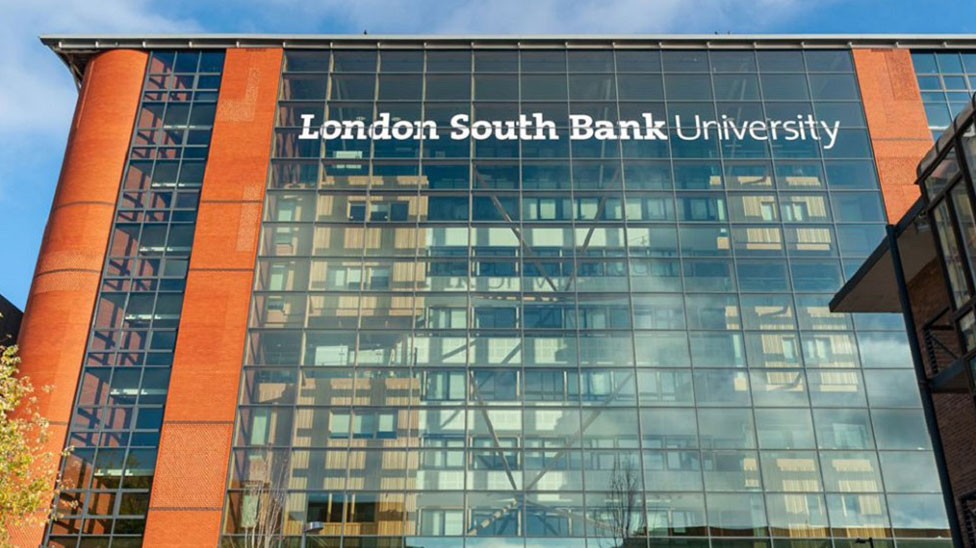
London South Bank University
Modernising university-wide communications to support a more connected, agile and digitally enabled organisation.
Location:london, UK
Client Type: higher education
Project Overview
As part of its wider digital transformation programme, London South Bank University (LSBU) set out to modernise its Telephony and Contact Centre platforms, creating a more modern approach to university-wide communications ahead of the 2025 Clearing period.
Following the selection of a cloud-based Unified Communications and Contact Centre solution, supplied by Wavenet and powered by 8×8, LSBU partnered with 4C to support the implementation of the new platform.
The project formed an important part of LSBU’s wider digital ambitions, helping to modernise its communications environment while supporting the needs of its students, staff and wider university community.
“I wanted to express my sincere appreciation for the hard work and dedication 4C shown in supporting us with the telephony migration, and for everything we’ve accomplished over the past three months. The 4C’s consultants expertise and knowledge in UC and CC migrations have been invaluable in assisting us meet the tight deadlines of this 3 month engagement.”.
Sarah Oyet
Head of Infrastructure and Application Support
Vision
- To migrate 600 users from the legacy on-premise Mitel MX One system and 150 Solidus users (100 for clearing) to a cloud-based Unified Communications as a Service (UCaaS) and Contact Centre as a Service (CCaaS) solution.
- To decommission the obsolete telephony infrastructure.
- To increase flexibility to handle peak call times, such as University Clearing.
- To increase productivity and collaboration through integration with Microsoft Teams and Salesforce.
- To enhance service delivery and responsiveness for both internal teams and student-facing departments.
- To improve security via SSO, ensuring consistent enforcement of security standards. To support hybrid and remote working for staff.
- To reduce operational risk, technical debt, and costs by minimising physical handset use and retiring aging infrastructure.
- To align the project with LSBU’s digital transformation and sustainability objectives.
Our Approach
With a tight deadline ahead of the 2025 Clearing period, 4C worked closely with LSBU and its technology supplier to provide a structured and coordinated approach from initial planning through to go-live.
The project began by establishing clear governance, responsibilities, timescales and requirements, alongside a detailed review of LSBU’s existing telephony, contact centre, network and integration environment. From there, 4C supported technical and operational readiness, bringing together migration planning, risk management, testing, training and user communications to prepare for a smooth transition.
Throughout implementation, 4C acted as the link between LSBU and the supplier, maintaining clarity around responsibilities, resolving issues and keeping activity aligned to the critical Clearing deadline. The approach continued through go-live, with coordinated cutover and number porting, on-site support and a structured handover into business as usual, giving LSBU a clear and controlled transition to its new communications platform.
Outcomes and benefits
The project has provided LSBU with a modern, flexible and future-ready communications environment, supporting its wider digital transformation ambitions while making communications simpler and more efficient. Overall, LSBU now has a more agile, resilient and cost-effective communications platform, providing a stronger foundation for future growth while improving the experience for staff and students.
Key Outcomes
- Simpler communications – voice, video, chat and contact centre services are brought together within a more unified environment.
- Improved staff experience – staff have more consistent communication tools across different devices and locations.
- Better student support – greater flexibility helps staff respond to calls, messages and enquiries more effectively.
- Greater scalability – cloud-based services can adapt to changing demand, particularly during important periods such as Clearing.
- Reduced operating costs – consolidating services, rationalising users and reducing reliance on physical infrastructure helps lower ongoing licensing, support and maintenance costs.
- Simplified management – centralised communications make the environment easier to administer and reduce the burden on internal IT teams.
- Improved resilience – moving away from legacy, hardware-dependent systems reduces the risks associated with hardware failure and service disruption.
- Supports hybrid working – staff can communicate effectively from different locations, providing greater flexibility.
- Reduced environmental impact – less on-premise hardware means reduced requirements for power, cooling and maintenance.
- Ready for future change – the new environment provides a scalable foundation to support LSBU’s longer-term digital transformation and service delivery goals.